
How I Found an Apartment in France
Once I landed my job working in cultural exchanges in southern France, I had a new mission. I needed to find a place to live as an American living in France. I had previously lived with a French family, which had its pros and cons. But with a full-time job and simply a new chapter, I needed a place to call my own. With years of experience watching House Hunters International, I set out to scan all the housing websites and apartment listings. It’s not easy to find housing as an American in France, but it’s not impossible. And more than five years later living in France, I’ve had four different addresses. If you’re studying abroad, working as a teaching assistant or living as an expat in France, I’ve rounded up some of my advice. Here are some of my best apartment hunting tips and how I found my apartment in France.
This article may include affiliate links. Full disclaimer.
Housing in France
We have to face the facts: France is an old country, and the buildings are, well, old. One of my apartment buildings’ dated back to the 1700s. Even if the building has been updated, there will certainly still be quirks. For example, the steps in one of my former apartment building were steep and not even. The floor wasn’t perfectly even either; I had to place tea lights under my bookshelf to ensure that my books didn’t fall off. I like to think of these minor inconveniences as charming. (Or I, at least, try to.)
Compared to the Americans, the Europeans make do with much less space, in general. American homes average around 2,300 square feet while French homes average around 1,216 square feet, according to Apartment Therapy. Read: cozy. It’s definitely an adjustment to live in a smaller space.
My first studio apartment was 31 square meters, or about 330 square feet. In American standards, that is miniscule. But for a single person living without roommates in France, it’s pretty good. I opted for a larger but more outdated apartment over a tiny but modern apartment. (I lasted about 6 months in a 170 square foot apartment…)
Apartment hunting in France
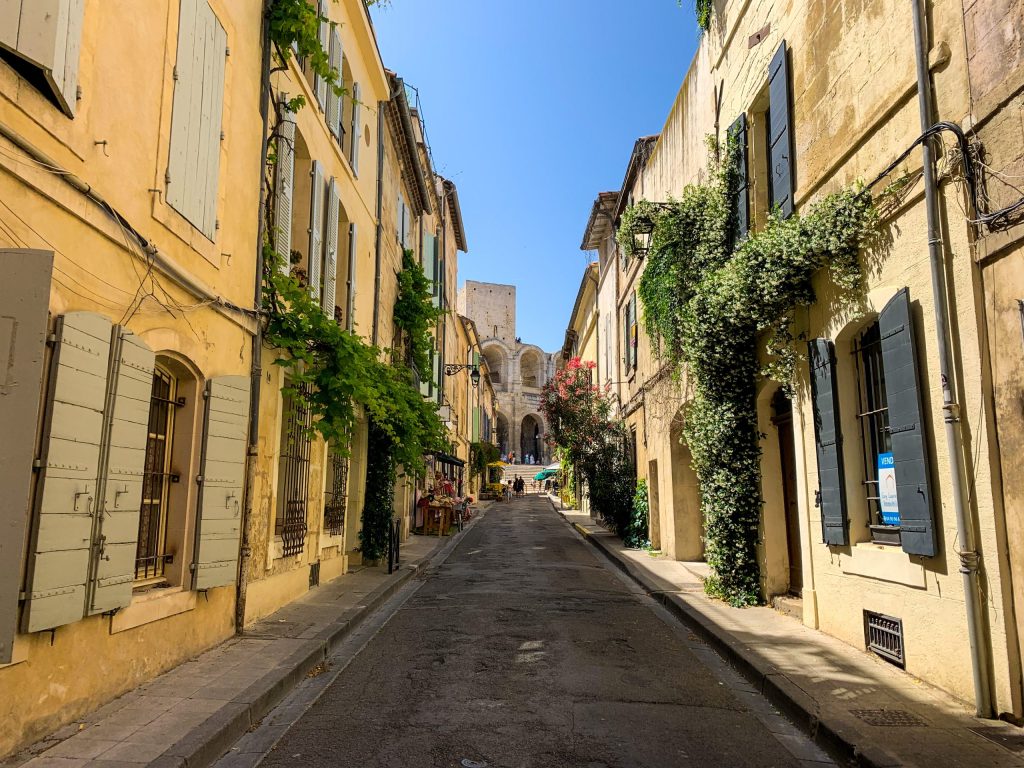
Eventually I got tired of the outdated amenities and shower mold… I spent months looking for a new apartment. I scrolled through the listings every day and sent requests for visits. The thing about searching for apartments in one of the largest cities in France: there are more people looking for apartments than there are apartments.
If you get the chance to visit the apartment, you’ll then be asked (or sometimes prior) for your dossier, or application for the apartment. Typical things agencies or owners may ask: a short description of your profession, age and type of contract; ID; avis d’imposition (or proof of taxes); past three pay stubs; and proof of garant, or a guarantor.
Note: if you’re like me and don’t have someone in France willing to be your guarantor, take a look at Visale, another solution for finding a guarantor. (I did this several times, and it worked like a charm!)
But just because you put the dossier together doesn’t mean you’ll get the apartment. Oftentimes, at least in my case, multiple people applied for the same apartment. Agencies or owners often look for stable income that’s at least 3x the rent and prioritize CDIs, or permanent contracts, over CDDs, or temporary contracts. And if you’re in a colocation (roommates) or en couple (in a relationship), even better because that often means two incomes.
My roommate and I fell in love with an apartment and sent our dossier right after the visit. Several days later, we found out that the owner didn’t pick our application, and we were heartbroken. We kept looking, but a few days after that, we received the news that the person selected didn’t end up taking the apartment. We quickly agreed and nabbed the apartment! Apartment hunting in France can be time-consuming and often moves quickly.
Budgeting for your apartment in France
French salaries are incredibly lower than American salaries. Much of your French salary goes to the government, whether for taxes or assistance programs or retirement or social security. We’re not going to get into the politics of why or how or is it the best system. But the fact is that at the end of the day, your take-home pay in France is considerably lower than an American salary. In France, salaries are discussed monthly, instead of annually as the Americans do.
In the United States, the median salary is about $61,000 per year, according to Visual Capitalist. And in France, the median monthly net salary is 2,183 euros per month, which would translate to about 27,000 euros annually. So let’s just say that budgeting for an American apartment is rien à voir with that for a French apartment.
Experts recommend that your rent should be 30% of your income, which was my goal in apartment hunting. But all that to say, when apartment hunting for a French apartment, consider your French income and budget. And do your best to set your American standards and budget aside.
Dishwashers, A/C, dryers, even ovens aren’t givens. Read the fine print of the annonce, or apartment listing. Is there an elevator, or is it a walk-up? Is it RDC (on the ground level)? Are the charges, or monthly fees, included in the price? When can they increase your rent and by how much? How much is the caution, or deposit?

Timeline for apartment hunting in France
When I was apartment hunting during my university years, I remember searching months in advance. And although I can’t speak for all of France, most of the apartments I looked at were ready immediately or within the next few weeks. This was difficult for my for my Type A, plan-ahead personality. Because looking way in advance does nothing.
I quickly fell in love with an apartment, but I wasn’t ready to move for the next month. Again, it depends on where you’re living, but if you’re in cities like Paris and Marseille, things go quickly.
In the United States, most leases have fixed durations, i.e. 12 months. And if you back out early, you may pay a fee. However, it’s different in France. You can break the lease of a furnished apartment in France but must give one month’s notice. If it’s an unfurnished residence, it’s often a 3-month notice. However, be sure to read the bail, or lease agreement, carefully.

Beware of arnaques
Unfortunately, there are bad people out there who want to take advantage of your apartment search. I eventually found one of my apartments through Leboncoin, similar to a Craigslist site, and it certainly wasn’t an arnaque, or scammer. But beware, no matter where you look that there are fake apartment listings and poorly intentioned people.
I found an apartment that I absolutely loved at a great price. I quickly emailed the proprietaire, expressed my interest and asked when we could set up a visit. He said he lived far away and that the last time that someone scheduled a visit, the person flaked out. I expressed that I was serious about the apartment and that I wouldn’t flake out. He had this elaborate story about this being his daughter’s apartment and that he wanted a serious tenant who would take care of the apartment. He said that to be sure that I wouldn’t waste his time, I needed to send him 150 euros to pay for his train ticket.

Bad news! If anyone ever asks you to pay anything to simply visit the apartment, back out immediately. There’s a good chance they’re trying to take advantage of you. Don’t exchange any financial information whatsoever. If it sounds fishy or too good to be true, it probably is.
I found another apartment that was in the right neighborhood and surprisingly modern for the price point. Again, I quickly sent a message saying that I was interested. It seemed too good to be true as the price was way lower than other apartments of that quality. I messaged with the proprietaire to schedule a visit, and then he stopped responding. Several days later, the apartment listing had been flagged as fraudulent. Unfortunately, it’s a reality that there are scammers out there. Don’t send anyone any money before you’ve signed your bail, or rental agreement.
Best websites for French apartment listings
When apartment hunting, there are two major choices: through un particulier (an individual) or une agence (an agency). You won’t have to pay agency fees if you go through an individual, but it may be more secure to go through an agency.
- Jinka: if there’s an app to download, it’s this one! It compiles different sites and puts the listings into one spot.
- Leboncoin
- Bien’ici
- SeLoger
- Logic-immo
- Airbnb: some Airbnbs do long-term rentals or can serve as a place to stay while you’re looking for a more long-term option. However, beware $$$$
- Local agency listings: You’ll have to pay fees for the real estate agencies, but you’ll spend less time worrying about arnaques.
- Word of mouth: This is one of the best ways to find an apartment in France. Ask around, let people know you’re on the hunt, put a message in different group chats, ask your employers if they have any recs.

What to do once you’ve signed le bail
Okie doke, you’ve finished all of the above steps. Now what? Once you’ve found your apartment in France and signed the bail, here’s what to do next. You’ll want to sign up for renter’s insurance. You may not even get the apartment keys before you can send proof of insurance. I am a fan of ACommeAssure, an insurance broker that proposes different offers based on your budget and wishes.
You’ll also want to get WiFi set up, if it’s not included in your lease. Some places to look: Bouygues, Sosh, Orange, Free.
And most fun of all, setting up electricity. Touch base with your proprietaire or agence regarding electricity contract and coordinates. Some popular choices for electricity and gas contracts: EDF and TotalEnergies.
And the most important step of finding an apartment in France? Furnishing and decorating it! Stores to find affordable home goods: IKEA, Maxi Bazar, HEMA, Gifi, Amazon France.
Here are some of my favorite home staples, including wall decor and coffee-table books.

I think if I had to sum up my advice for how to find an apartment in France, it would be the two following pieces… Ask for help and recommendations, and wait till you’re in the country to make a decision. You’ll want to come in with realistic expectations and keep your eyes peeled for charm! So whether you’re studying abroad or working as a TAPIF assistant (or just living your best expat life) in France, these tips are great starting points to finding your home away from home.
With 5+ years of expat life under my belt, I published the France Field Guide, a resource jam-packed with tips, tricks and advice for travel, language and expat life in France. Read the first chapter here!